Meet Your Therapist
Heal from trauma
Discover how to show up authentically in your life
Clients sit down on my couch and say they are worried about “doing therapy right.” They’ve had experiences both in therapy and in their personal lives where no matter how hard they sought for connection they felt unseen, unheard, and misunderstood. They don’t trust that anyone could hold space for them the way they do for others. They want to be perfect even in the therapy space. Relationships for them are wrought with performance expectations, pressure to hold everything together, and weak intimate connections.
Therapy with me becomes a place where they can finally put down their manager role. My clients begin to understand their stuck places as we gently pull apart their struggles, observe them, and touch the real feelings underneath all their anxious striving for perfection. My clients begin to discover what they really want and how to bravely show up as their authentic selves in relationships.
I pride myself on being both a gentle and direct person. I share many observations and give a lot of feedback. I’m not going to sit there and stare at my clients hoping they sort through their suffering in front of me with no help.
High achievers need someone who will both challenge them but also give them the space to show up authentically and (gasp!) maybe even fall apart a little.

Credentials
Master of Education in
Clinical Mental Health Counseling
Kent State University
Ohio Counseling License: #C.2506790
Bachelor of Science in Psychology
Portland State University

Approaches to Treatment
Every individual and couple requires a unique treatment. My clinical approach utilizes the following counseling theories, philosophies, and interventions as is appropriate for the client.
Attachment Theory
Trauma Therapy
Somatic Approaches
Psychodynamic
Relational Therapy
Existentialism
Frequently
Asked Questions
-
Friends can provide support and encouragement. Therapy offers a dedicated space focused entirely on you, where you can explore patterns, underlying causes, and obstacles that may be difficult for you to recognize on your own or with a friend. My role is not to give simple advice, but to help you better understand yourself and create meaningful change.
-
No. You don’t need to have the right words or know where to start. We’ll work together to figure out what’s bringing you in and what you hope will be different.
-
Not at all. Many people seek therapy because they’re functioning well in most areas of life but feel stuck, disconnected, overwhelmed, and dissatisfied. Therapy isn’t just for crises, it’s an also a place to gain insight, strengthen relationships, and build a more fulfilling life.
-
That’s more common than you think. Many people first consider therapy because a partner, friend, or family member expressed concern. Our time together will focus on your experiences, your goals, and what matters to you, not just what someone else wants you from you.
-
While creating a space where you feel heard and understood is important, I take an active role in the therapy process. I’ll ask questions, offer observations, share feedback, and gently challenge patterns that may be keeping you stuck.
Feel free to book a consultation to ask further questions before jumping into therapy. Consultations are a free resource I offer to ensure that you feel I’m a good therapist for you.
My approach is compassionate but direct. The focus of therapy centers around your needs and goals.
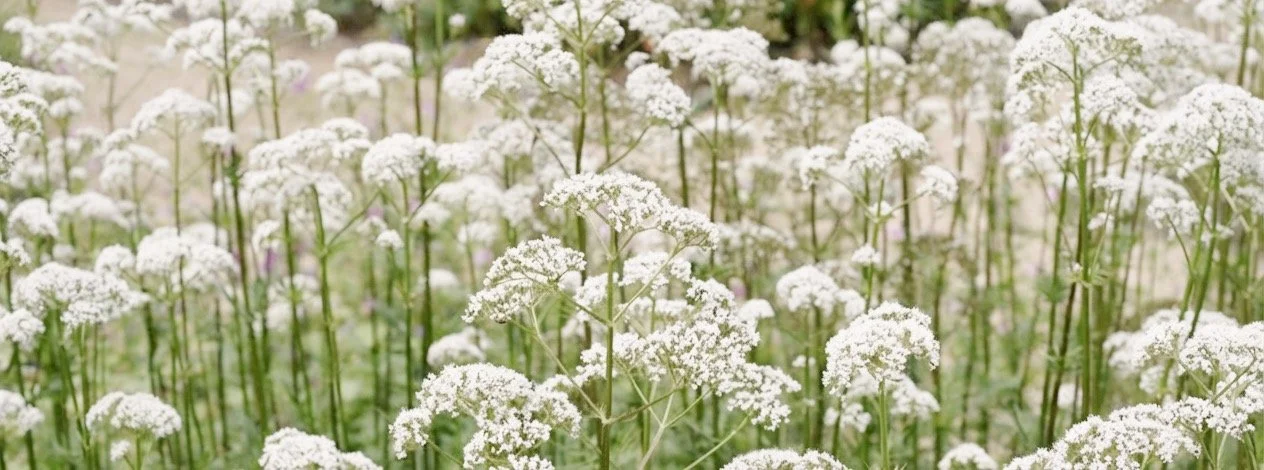
Valerian
(valeriana officinalis)
latin root word “valere”
meaning to be
strong and healthy
Oh, valerian, such a vibrant plant. I wanted to name my practice after a plant I have a personal relationship with and one that holds value in my own life. I grow this flower in my backyard and each year when she emerges her scent overpowers the whole garden. She grows tall with strong, prominent arms and large tuffs of flowers. Her roots are used medicinally, often added to a tea to aid in sleep. But be wary, her dried roots are pungent and have an unpleasant odor and taste.
She lives in a plant category called nervines which are herbs that support, nourish, and calm the nervous system. Some of her nervine companions are skullcap, lemon balm, chamomile, and milky oats, to name a few.
To the gardeners among us, her characteristic of strength should not be overlooked… this beauty will spread her flowers without holding back. She’s not trying to make herself small for anyone.